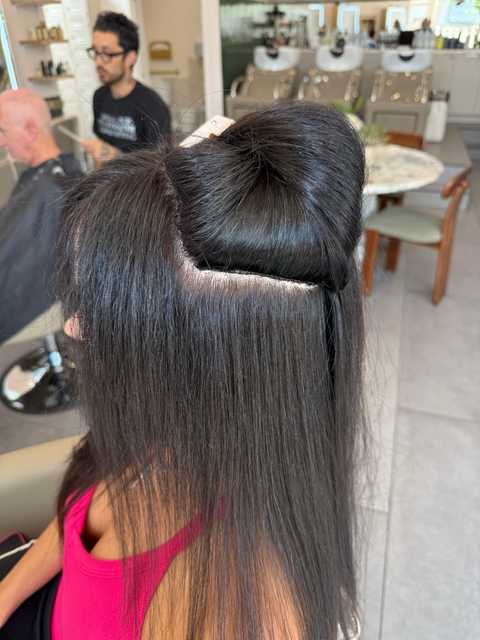
Fine, Limp Hair? Find a Hair Salon Near Me in West Hollywood That Actually Cuts for Volume
By Daniel K Palmer Salon | July 18, 2026

A long-time client told us their hair has “never looked healthier” after years of highlighting, and yes, the right haircut can make fine, limp hair look noticeably fuller fast. We do it by removing the weight that drags your hair down, adjusting the outline so it reads thicker, and building lift in the right spots. It’s not a cure for genetic thinning or medical hair loss, but for most fine-hair problems, shape changes everything.
Fine hair isn’t the problem. Flat shape is.
“Fine” usually means the strand itself is small. It can still be a lot of hair, or not much at all. Limp hair is what happens when the cut is working against you: too much length, too much weight sitting at the ends, or layers that are so soft they collapse the moment you walk out.
In West Hollywood, the sunny, dry climate adds its own twist. Fine hair can get staticky, fluffy at the ends, and flat at the root all in the same day. So you need a cut that air-dries decently, holds a quick blowout, and still looks good when you’re doing a 10-minute “get ready” before heading out.
Real talk: If your hair only looks “full” when it’s freshly curled and sprayed, the cut is asking you to do too much work.
And if you’re in the Melrose District or Fairfax–Melrose area, that fashion-forward vibe means you probably want something polished, but not precious. We’re on the same page.
The 3 haircut moves that give fine hair instant volume (without choppy layers)
When we cut fine, limp hair for volume, we’re not chasing “more texture.” We’re building structure. That’s how you get hair that looks thicker in real life and on camera, not just in the mirror at the salon.
1) Bluntness where you actually need density
A clean, stronger perimeter makes fine hair read fuller. Think blunt bob, a collarbone “lob” with a solid line, or even long hair with a more intentional edge. One client came in after color correction and left saying their hair felt “lighter, vibrant, and more voluminous.” That “lighter” part matters. Taking off see-through ends can make the whole head look thicker.
2) Short stacking in the back (when your crown falls flat)
If you’re flat at the crown, a little stacking or internal support in the back can change your whole profile. It’s controlled. It’s not a spiky, over-layered situation. The goal is lift that still looks smooth when you tuck your hair behind your ear.
3) Careful, minimal layering (and sometimes, none)
Heavy layers can backfire on very fine, low-density hair. You end up with wispy ends and no shape. We often do the opposite: keep the base strong, add only the layers that help movement, and skip aggressive texturizing that makes hair look thinner.
“I have boring, straight hair and he makes it look voluminous without needing to style it.”
, one of our regulars
If you want volume that lasts past Melrose shopping, start with this consult
Our haircut service is 60 minutes and includes a professional blowout so you can see the shape working right away. Before we cut, we’ll take 15 to 30 minutes to talk through what you hate about your hair right now, how you style it on a normal day, and what “volume” means to you. (For some people, it’s lift at the root. For others, it’s thickness at the ends.)
Bring 2 to 3 photos, but we’ll also talk honestly about what’s realistic for your density and your hairline. If your hair is very low density or you’re dealing with sudden shedding, we’ll tell you that a cut alone has limits and point you toward next steps, including talking with a medical professional if it’s warranted.
The “don’t waste your time” photo checklist
- One photo of the cut you like from the side (so we can see the back shape).
- One photo of someone with similar hair texture to yours.
- One photo of what you do not want (this saves so much back-and-forth).
And yes, we’re an easy ride from Beverly Hills and Hollywood. If you’re coming in after work, ask us about evening availability when you book so we can match you with the right timing.
Who should skip heavy texturizing, and what we do instead
If your hair is fine and you can see through the ends, heavy razoring and aggressive thinning usually make things worse. The cut may look cool for a week, then it starts separating and falling flat.
This is where our team leans into precision. A lot of clients mention “precision” and “attention to detail, ” and you’ll feel that in the way we build the line and check the balance before we ever call it done.
If you still want movement, we’ll do it in safer ways: subtle internal shaping, face-framing that doesn’t chew up your ends, and bang work that fits how you actually wear your hair. One review that sticks with us came from someone who said they have tons of fine hair and a very specific way they like their bangs, and that we nailed it. That’s the goal. Your hair shouldn’t have to “behave” for you to like it.
Quick styling tip for fine hair: keep products light at the root. Low-residue shampoo, a small amount of root lift, and heat directed up at the crown usually beats heavy oils and thick creams.
If you want a deeper dive into our approach, you might like our Hair Cut & Style guide in West Hollywood.
Why people stick with our hair studio in the Fairfax–Melrose area
A lot of hair salons can give you a nice blowout. The trust piece is different. We hear it again and again: people talk about our team being “nice, ” “accommodating, ” and genuinely fun to be around. They also talk about leaving with hair that feels healthier, shinier, and more confident-making. That matters when you’re trying to get volume without frying your ends.
We also keep it honest in consultation. One client put it perfectly: the consult was “honest to the point he will tell you exactly what you need.” If a blunt bob is going to be your best volume move, we’ll say that. If keeping some length and tightening the perimeter is smarter, we’ll say that too.
If you’re still deciding, these two reads tend to help:
Ready for fuller hair with less effort? Book a consult for our 60-minute Haircut ($70 to $330). We’ll talk through your goal, agree on the shape, then finish with a blowout so you leave the Melrose District looking like you meant to.
Visit: 1000 North Fairfax Avenue, West Hollywood, CA 90046-6103 | Call: +14243861763 | Email: bookings@danielkpalmer.com